
CN
登录 / 注册组织机构
会议组织人/ Organizers

Han Yan The University of Tokyo, Institute for Solid State Physics
I am a theoretical physicist at The University of Tokyo’s Institute for Solid State Physics, working at the interface of quantum matter and quantum information. My research explores emergent gauge structures, generalized symmetries, and topological phases in frustrated magnets, including quantum spin-ice flux liquids and designer magnetic materials. I develop analytic theory and large-scale simulations to map phase diagrams and identify experimentally accessible signatures. In parallel, I design quantum error-correcting codes inspired by Gauss-law constraints and exotic order, aiming for robustness against realistic noise. I enjoy building interdisciplinary collaborations linking condensed-matter theory, mathematics, and quantum technologies for future quantum devices.
Yifan Liu The University of Tokyo, Institute for Solid State Physics
Yifan Liu obtained his Master's in Physics from the University of Tokyo in 2024. He is pursuing his Ph.D. in Theoretical Physics at the University of Tokyo in Japan, supervised by Masaki Oshikawa. His research interests encompass various aspects of theoretical condensed matter physics, including (boundary) conformal field theory and non-Hermitian physics.
报告人/reporter
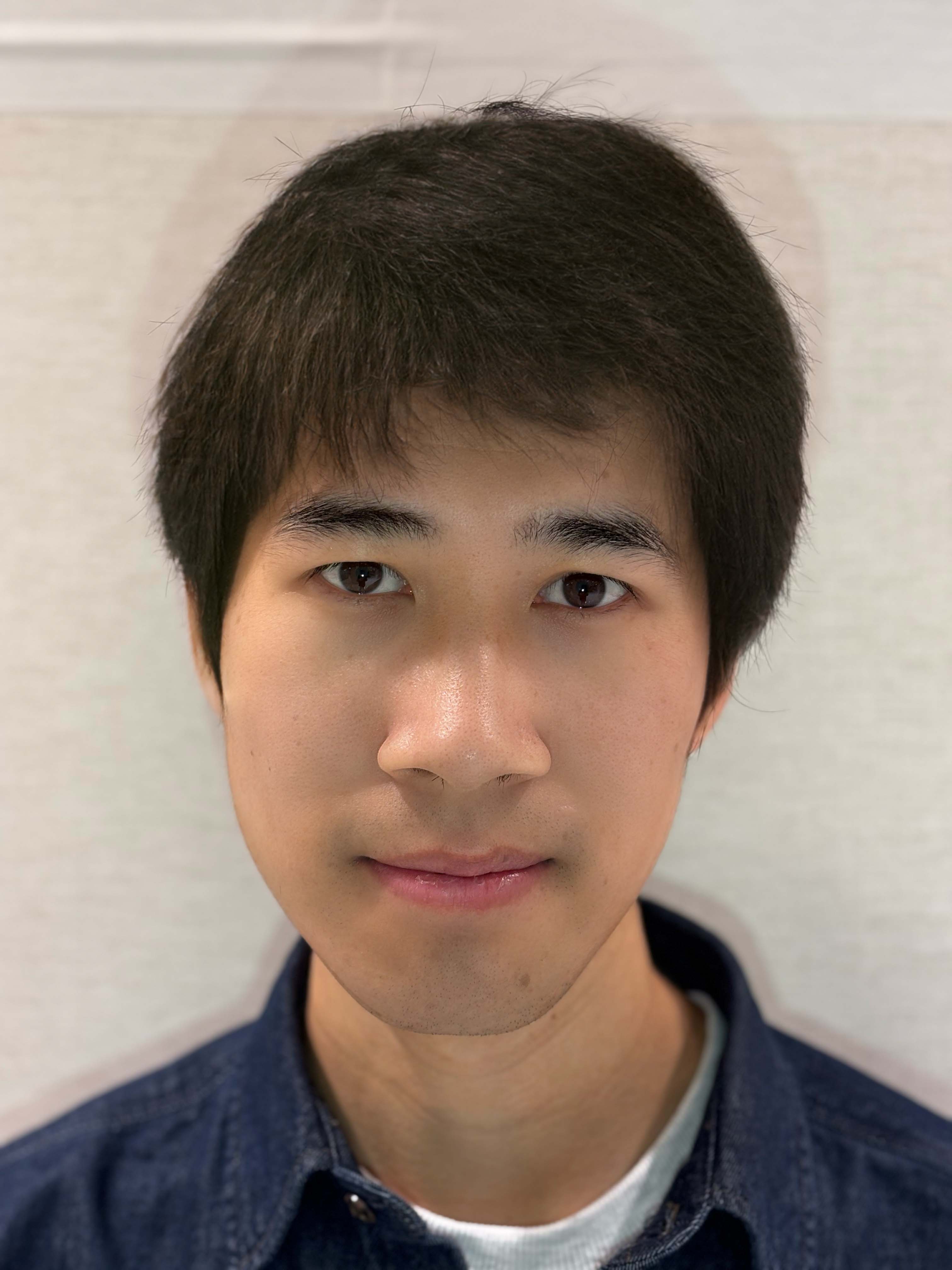
Feng-Feng Song The University of Tokyo, Institute for Solid State Physics
Title:Superfluid dome in the spatially modulated two-dimensional XY model
Abstract: In strongly correlated electron systems, superconductivity and charge density waves often coexist in close proximity, suggesting a deeper relationship between these competing phases. Recent research indicates that these orders can intertwine, with the superconducting order parameter coupling to modulations in the electronic density. To elucidate this interplay, we study a two-dimensional XY model with a periodic modulation of the coupling strength in one spatial direction. Using a combination of tensor network methods and Monte Carlo simulations, we reveal a non-monotonic, dome-like dependence of Tc on the modulation wavelength, with the peak Tc shifting to longer wavelengths as the modulation strength grows. The origin of this phenomenon is traced back to an effective pinning of vortices in the valleys of the modulation, confirmed by a comparison to modulated q-state clock models. These findings shed new light on the phase behavior of intertwined superconducting and charge-ordered states, offering a deeper understanding of their complex interactions.
Ref:
[1] N. Baldelli et. al., npj Quantum Mater. 10, 22 (2025).
[2] F.-F. Song et. al., Phys. Rev. Lett. 135, 256001 (2025).
Profile:
Feng-Feng Song is a Postdoctoral Researcher at the Institute for Solid State Physics, the University of Toky. He received his Ph.D. from the Department of Physics, Tsinghua University. His research focuses on strongly correlated many-body systems, including frustrated spin systems and phase-coherence phenomena in superconductors, with an emphasis on tensor network methods.

王俊森 中科院强磁场中心
Title: Spiral Spin Liquid on Shastry-Sutherland Lattice
Abstract: Motivated by recent experimental advances in high-spin rare-earth Shastry–Sutherland (SS) magnets, we revisit the seemingly innocuous classical SS model and uncover a surprising spiral spin liquid (SSL) phase —— a new class of classical spin liquid with deep connections to fracton physics, higher-rank gauge theories, and holography —— that appears at elevated temperatures above the well-known nematic spiral ground state. We first demonstrate the existence of a continuous spiral contour in momentum space using complementary analytical approaches, including Luttinger–Tisza analysis, self-consistent Gaussian approximation, and nematic bond theory. Unbiased classical Monte Carlo simulations then unambiguously identify this intermediate SSL phase from both real-space spin configurations and momentum-space structure factors. We further characterize its distinct signatures in the dynamical spin structure factor, providing direct guidance for future experiments. In the presence of a magnetic field, we reveal an SSL-induced enhancement of the magnetocaloric effect, attributable to a novel form of topological cooling. The robustness of the SSL phase against weak perturbations is also examined. Our results establish the SS lattice as a promising platform for realizing spiral spin liquids and open a new route toward their experimental discovery in a broad class of materials.
Ref: arXiv:2602:xxxxx
Profile:
Junsen Wang received his B.S. (2015) and Ph.D. (2021) from University of Science and Technology of China. He is currently a Post-Doc at Institute of Theoretical Physics and High Magnetic Field Laboratory, Chinese Academy of Sciences. His research focuses on exotic phenomena in quantum materials and quantum simulators.

李宏超 东京大学
Title: Dissipative Superfluidity in a Molecular Bose-Einstein Condensate
Abstract: Quantum gases of dipolar molecules, which serve as a platform to realize clean and controllable long-range interacting systems, have received considerable attention in the fields of many-body physics and quantum simulation. However, heteronuclear molecules inevitably suffer the two-body loss due to chemical reactions, which is particularly serious for bosonic molecules. Recently, with the development of the microwave shielding the first experimental realization of a BEC of heteronuclear molecules has been reported [1]. Thus, it is of fundamental interest to understand whether or not superfluidity exists under two-body loss in such BECs, since dissipation may deteriorate the phase coherence of a superfluid. In this talk, I am going to introduce our work on the existence of superfluidity in a molecular BEC [2]. We develop a superfluid transport theory for a dissipative BEC to show that a weak uniform two-body loss can induce phase rigidity, leading to superfluid transport of bosons even without repulsive interparticle interactions. We also show a generalized f-sum rule for a dissipative superfluid as a consequence of weak U(1) symmetry. We also demonstrate that dissipation enhances the stability of a molecular BEC with dipolar interactions. Finally, we show the formation of quantized vortices in a dissipative superfluid by stirring the BEC with a high angular velocity.
[1]: N. Bigagli, et al., Nature 631, 289 (2024)
[2]: H. Li, et al., Phys. Rev. Lett. 135, 166001 (2025)
Profile:
Hongchao Li is a PhD student of Prof. Masahito Ueda’s group. His main research interests are on quantum many-body theory in open quantum systems, quantum optics, statistical mechanics, quantum algorithms and quantum simulation.

曹伟光 University of Southern Denmark
Title: Generalized symmetries and their application in topological phases of matter
Abstract: Recently, the notion of symmetry has been generalized, including high form, subsystem, and noninvertible symmetries. These novel symmetries haven extended our understanding of topological phases of matter. In this talk, I will review the recent development on generalized symmetry, with a focus on noninvertible symmetry and the phases protected by it.
Profile:
After obatining his PhD at University of Tokyo, Weiguang Cao became a postdoctoral researcher at the Centre for Quantum Mathematics at the University of Southern Denmark. He works on generalized symmetries—especially noninvertible and spatially modulated symmetries—and how they organize quantum phases of matter in lattice models and quantum field theory.

Linhao Li Penn State University
Title: Matrix Product States with Modulated Symmetries
Abstract: Matrix product states (MPS) provide a powerful framework for characterizing one-dimensional topological phases of matter and for formulating Lieb–Schultz–Mattis (LSM)-type constraints. Here we generalize the MPS formalism to translationally invariant systems with general modulated symmetries. We show that the standard symmetry “push-through” condition for conventional global symmetry must be revised to account for symmetry modulation, and we derive the appropriate generalized condition. Using this generalized push-through structure, we classify one-dimensional symmetry-protected topological (SPT) phases with modulated symmetries and formulate LSM-type constraints within the same MPS-based framework. This talk is based on an upcoming work with Bi Zhen.
Profile:
Linhao Li is a postdoc at Penn State University. His interests include generalized symmetry and topological phases of matter.

Jing Zhou Okinawa Institute of Science and Technology Graduate University
Title: Magnetic Order Selection and Emergent Phonon Magnetism from Spin–Phonon Coupling
Abstract:Spin–phonon coupling links magnetic and lattice degrees of freedom and can qualitatively reshape both magnetic order and lattice excitations. In this talk, I will discuss two problems where this interplay plays a central role.
First, I will consider the non-equilibrium dynamics of frustrated magnets following a quench. In the presence of spin–phonon coupling, lattice fluctuations feed back onto the magnetic sector and modify the effective anisotropies that govern order selection. Using numerical simulations, we show that this feedback can transiently favor magnetic states that are not selected in equilibrium. From a theoretical perspective, this behavior can be understood in terms of a dynamically generated sign change of effective anisotropy parameters in the coupled spin–lattice evolution.
In the second part, I will turn to the opposite direction and ask how magnetic fluctuations affect phonons. When degenerate phonon modes hybridize with magnetic excitations, they acquire an effective magnetic moment. Near magnetic phase transitions, critical fluctuations strongly enhance this effect, leading to emergent phonon magnetism.
Profile:
Jing Zhou is currently a postdoc at the Okinawa Institute of Science and Technology (OIST), working in the group of Prof. Shu Zhang. She received her Ph.D. from the Institute of Physics, Chinese Academy of Sciences in 2025, under the supervision of Prof. Yuan Wan. Her research focuses on frustrated magnetic systems, spin–phonon coupling, and nonequilibrium dynamics.

Ching-Yu Yao The University of Tokyo
Title:Lattice Translation Modulated Symmetries and TFTs
Abstract:Modulated symmetries are internal symmetries that are not invariant under spacetime symmetry actions. Recent studies show that some of the symmetry-protected topological (SPT) phases fail to survive in the presence of the modulation. In this talk, I will general the discussion to the lattice translation modulated symmetries beyond invertible symmetries in 1+1D via the tensor network language. Although the topological behaviors are broken because of the presence of modulations, I will demonstrate how to construct the modulated version of the symmetry TFT bulks, and recover some known results in invertible cases. This talk will be based on the preprint [arXiv:2510.03889].
Profile:
Ching-Yu Yao is a Master student at the University of Tokyo, supervised by Prof. Masaki Oshikawa. His research explores generalized symmetries in quantum systems, with a focus on quantum phases of matter in lattice models.