2025-04-01 12:00:00
Early Bird Registration Before
2025-04-15 12:00:00
Registration Deadline
2025-04-30 12:00:00
Attendance Confirmation
2025-05-10 12:00:00
Abstract Submission Before

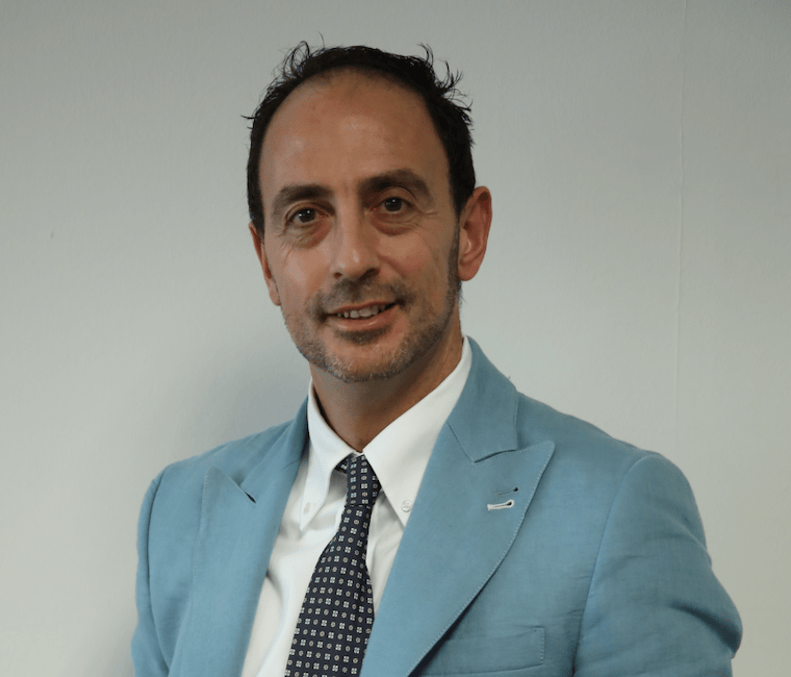
Alessandro Stroppa (CNR-SPIN, Italy)
Dr. Alessandro Stroppa is a director of research from CNR-SPIN in Italy.
He earned his Ph.D. in theoretical condensed matter physics from the University of Trieste in 2006 and subsequently pursued research in computational materials science at the University of Vienna. Since 2009, he has been affiliated with the Italian National Research Council (CNR). Additionally, he is a contract professor at the University of L'Aquila.
His research primarily focuses on materials science, with particular emphasis on hybrid organic-inorganic hybrid perovskite materials, two-dimensional systems, and altermagnetism covering interest for a wide range of topics, such as photovoltaics, multiferroicity and magnetoelectricity, twistronics, magneto-optics, nonlinear optical properties, and skyrmions. To date, he has published approximately 145 peer-reviewed papers. Since 2020, he has been listed among the top 2% of global scientists in the rankings released by Stanford University.
Dr. Alessandro Stroppa has received several recognitions: one of his paper has been selected for the "Best New Journal of Physics Collection 2008"; research highlight at the Euromat Conference in 2013; best oral presentation awards at the Italian Physical Society conferences in 2005 and 2011; certificate of appreciation for “his important contributions to the theoretical understanding of microscopic mechanisms of multiferroicity and magnetoelectricity in perovskite metal-organic frameworks” by Nature Conference (Nankai University, 2019).
Since 2017, in collaboration with Shanghai University, he has been organizing advanced schools on computational materials science and symmetry analysis such as:
https://www.spin.cnr.it/news-events/item/258-the-shanghai-international-crystallographic-school-workshop-on-chirality-in-solid-state-physics-and-quantum-materials
https://www.spin.cnr.it/news-events/item/16-ending-first-edition-of-shanghai-international-crystallographic-school and many others.
https://www.alessandrostroppa.com
***********************************************************************************

Michele Reticcioli (CNR-SPIN, Italy)
Dr. Michele Reticcioli is an Italian researcher in condensed matter physics. He obtained his Master degree in Physics in 2015 at the University of L'Aquila (Italy), defended his PhD Thesis in 2019 at University of Vienna (Austria), was for 5 months at the Vienna University of Technology as postdoc fellow, and held the position of University Assistant in the Computational Materials Physics department at the University of Vienna till 2024. Currently, he is employed by the Italian National Council of Research (CNR-SPIN) as senior postdoc in L'Aquila (Italy). His scientific work has been awarded several prizes, and his research has been funded through national and international projects. The chemical and physical properties of transition metal oxide surfaces are at the core of his research activity. His studies are conducted by using computational techniques in the framework of density functional theory and machine learning, and focus in particular on the effects and processes driven by excess electronic charge on the material surfaces, including the formation of exotic states such as polarons.
https://homepage.univie.ac.at/michele.reticcioli
***********************************************************************************
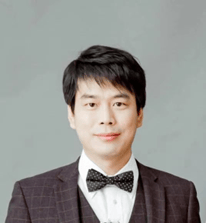
Wei Ren (local organizer, Shanghai University, China)
Dr. Wei Ren from Shanghai University is a highly accomplished researcher in physics. He got his bachelor's degree from the National Base for Physics at Shanxi University and his Ph.D. in physics from The University of Hong Kong. After postdoctoral and research assistant professor positions at The Hong Kong University of Science and Technology and the University of Arkansas respectively, he is now a professor at Shanghai University's Department of Physics. He founded the International Center for Quantum and Molecular Structures at Shanghai University. His research interests include computational condensed matter physics, quantum materials informatics, and materials data mining and artificial intelligence machine learning. He has published over 200 peer-reviewed papers, with many in top - tier journals like 13 in Physical Review Letters, 60 in Physical Review B, 1 in Nature, 1 in Science, 2 in Advanced Materials, and 2 in Nano Letters, etc. He has made significant contributions such as predicting spin - chirality - driven monolayer multiferroicity in 2D halide vanadium, reporting slip ferroelectricity in bilayer vanadium sulfide and its ferro - valley magnetoelectric coupling multiferroicity, and reporting the coexistence of Dirac and Weyl electron structures in a novel topological semimetal polar crystal material. He was selected as a Young Changjiang Scholar in 2018, won the 2016 Fok Ying Tung Young Teachers Award, was named a Shanghai Outstanding Academic Leader in 2022, received the Wang Kuancheng Talent Award in 2022, and was recognized in the Top 10 Academic Advances of Shanghai University in 2023.
***********************************************************************************
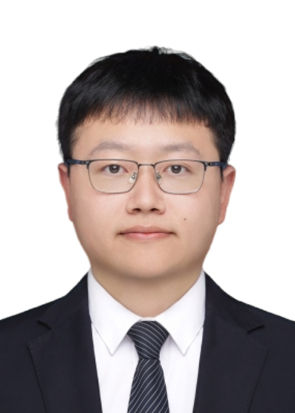
Cheng Tang (local organizer, Shanghai University, China)
Dr. Cheng Tang from Materials Genome Institute of Shanghai University graduated from Nankai University with a bachelor's degree, later obtained his master's degree from Shandong University, and eventually earned his Ph.D. from Queensland University of Technology in Australia. From October 2021 to December 2023, he worked as a postdoctoral researcher and senior research assistant at Queensland University of Technology, then joined Shanghai University as an associate professor in 2024 through the Shanghai Overseas High level Young Talent Program. He got National Scholarship for Postgraduate Students and Chinese Government Award for Outstanding Self-financed Students Abroad. His research interests are firmly centered around the theoretical exploration of the physical and chemical properties of two-dimensional materials, such as magnetism, ferroelectricity, multiferroicity, and optoelectronic properties. To date, he has published over 70 SCI papers, which have been cited more than 2,000 times on Google Scholar, with an h-index of 28. Among these, over 20 papers are published as the first or corresponding author in journals such as J. Am. Chem. Soc., Adv. Funct. Mater., Nano Energy, Nanoscale Horiz., J. Mater. Chem. C, and J. Mater. Sci. Technol.
https://mgi.shu.edu.cn/info/1069/5075.htm
***********************************************************************************
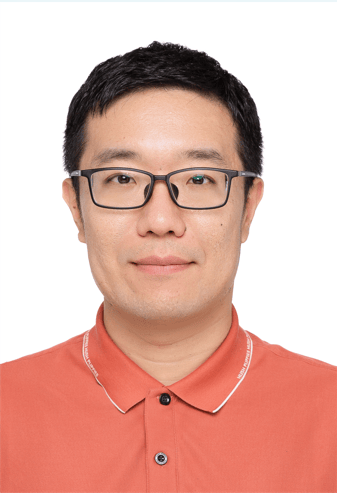
Qihang Liu (Southern University of Science and Technology, Shenzen, China)
PRIN 2022 codice 2022F2K7J5 “Two-dimensional chiral hybrid organic-inorganic perovskites for chiroptoelectronics” PE 3 funded by PNRR Missione 4 “Istruzione e Ricerca” – Componente C2 –Investimento 1.1, “Fondo per il Programma Nazionale di Ricerca e Progetti di Rilevante Interesse Nazionale” PRIN 2022 – CUP B53D23004130006.
Bilateral agreement for scientific collaboration CNR and NSFC (China), "Ferroelectric and chiral hybrid organic inorganic perovskites", for the years 2024-2025 (CUP B53C2300716000) funded by Unit for International Relations of CNR.

June 22nd
Registration
June 23rd - June 25th
Workshop
June 25th - June 26th
School
Shanghai University (Baoshan Campus)
J202 (Workshop & School)
E106 (Registration)
Yixin Canteen(Floor 3)(Lunch & Dinner)